
Frontier Shores: Collection, entanglement, and the manufacture of identity in Oceania
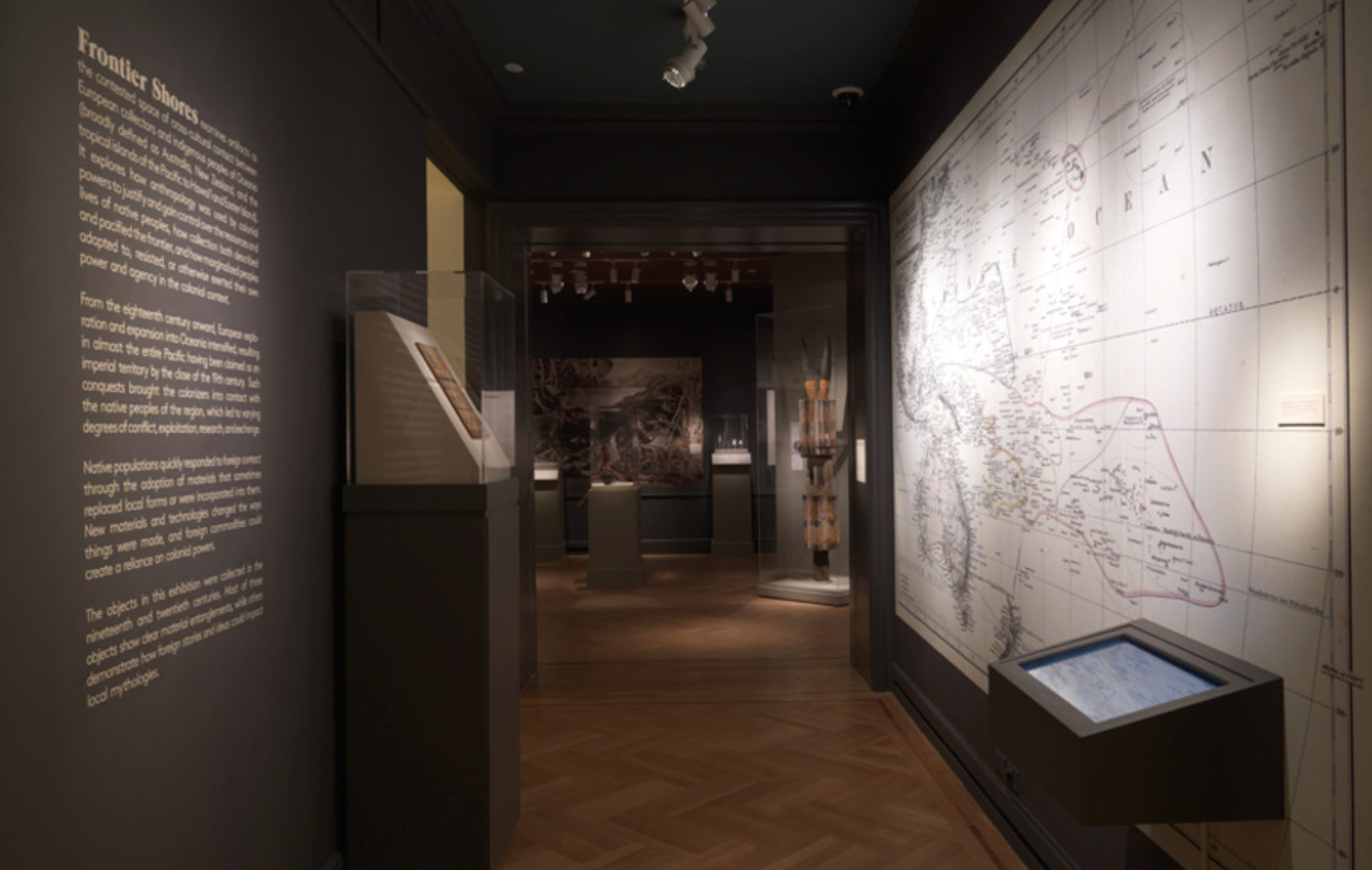
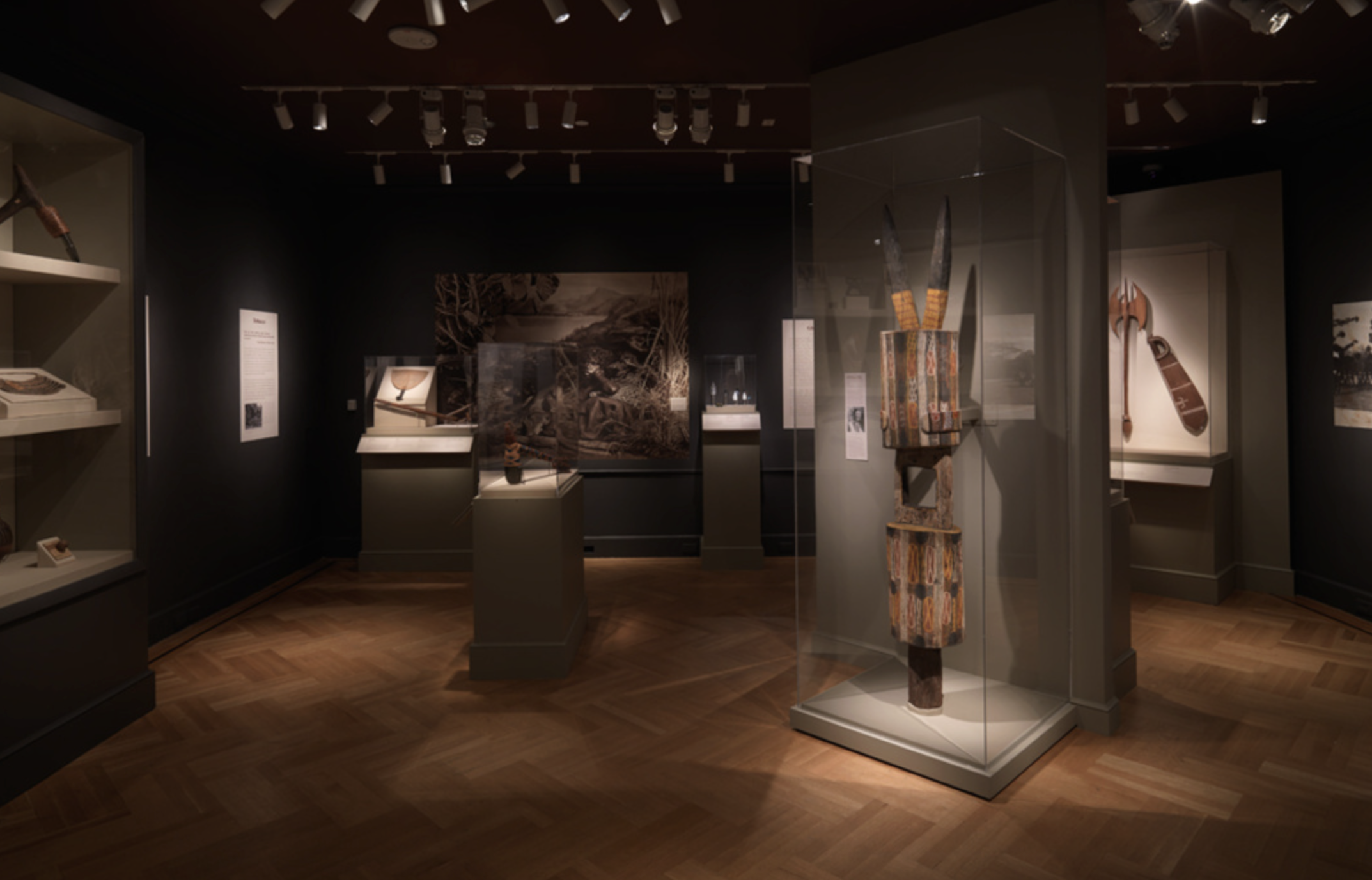
Frontier Shores: Collection, Entanglement and the Manufacture of Identity in Oceania examined artifacts as the contested space of cross-cultural contact between European collectors and the native peoples of the region. Louis Soulard participated in both the exhibition and the publication as a researcher as part of his graduate degree at New York University.
In the nineteenth and early twentieth centuries, the growing discipline of anthropology was both a powerful tool of colonial control and an ideological justification for it. As European empires and their commercial reach expanded, different populations became intertwined in relationships of exchange and power. Focusing on Oceania—the vast region encompassing Australia, New Zealand, New Guinea, and the tropical Pacific Islands—Frontier Shores explored how anthropology was used by colonial powers to justify and gain control over the resources and lives of the various native peoples, how collection both described and pacified the frontier, and how marginalized peoples adapted to, resisted, or otherwise exerted their own power and agency in the colonial context.
Thirty-nine objects, collected from the 1830s to the mid-twentieth century, demonstrated the richness of cultural contact in Oceania and the ways in which this material was often used to construct an imagined culture or tradition. A digital interactive available in the Gallery and online explored the cultural makeup of this diverse region and plotted many of the objects into a chronology of cultural contact.
Frontier Shores: Collection, Entanglement, and the Manufacture of Identity in Oceania is a richly illustrated book that expands upon the themes of the exhibition and conveys the collection stories associated with the objects by combining physical analyses with related archival materials, positioning them within both contemporary and current intellectual discourse.