
Louis Kahn, A Unique Desk from the Weiss House
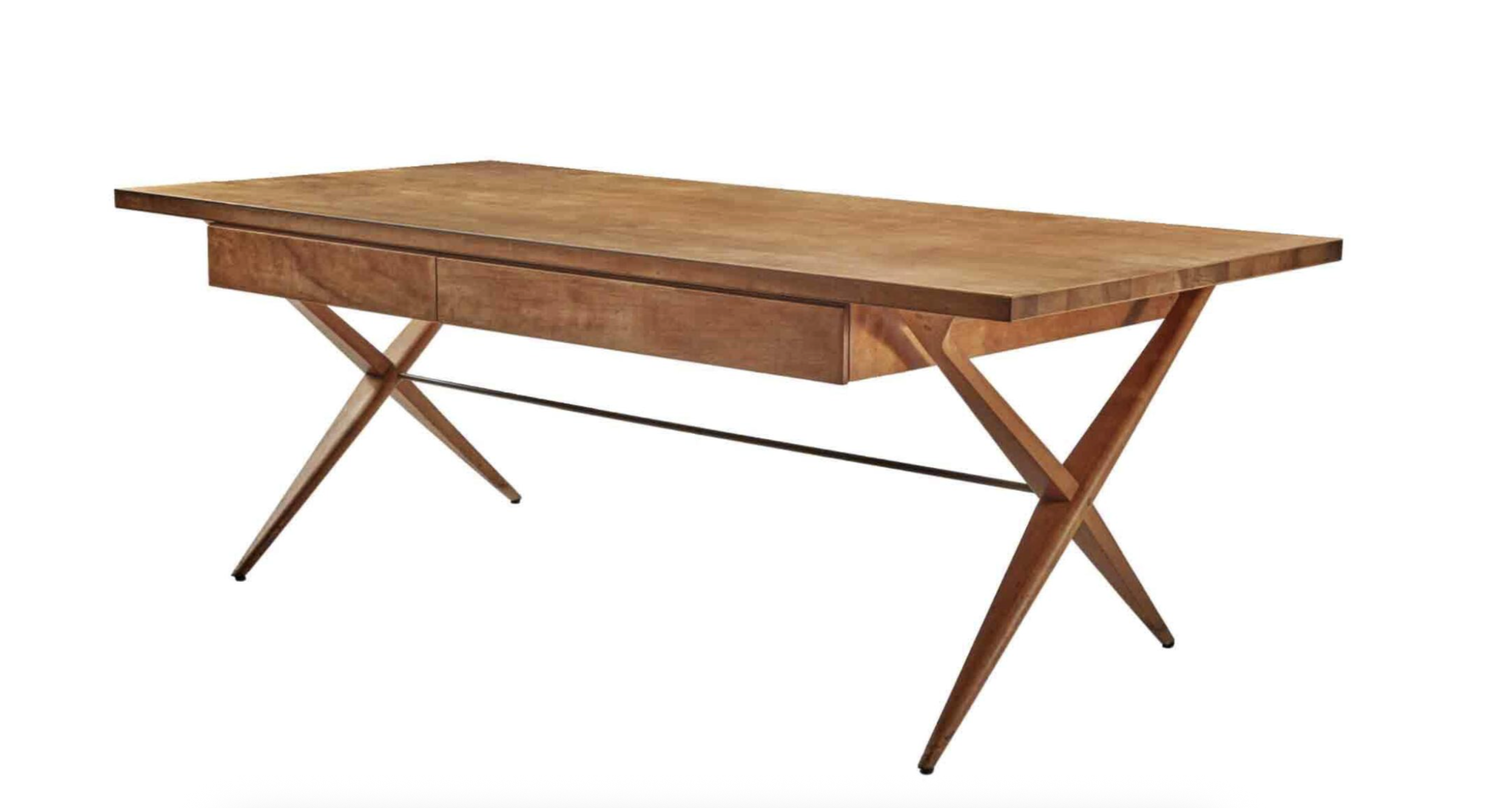
The present desk, a unique work by Louis Kahn specifically designed for the Weiss House (1947-1950), is a remarkable work in walnut by the American architect. Elegant and modern, the desk embodies the architectural and artistic ideals of a visionary creator at the height of his powers. His concern for the proportions, spatial organization and overall atmosphere of his buildings led him to create a number of furniture pieces for his clients’ homes in the early 1940s. Inspired by the new principles of Scandinavian and mid-century American design that he revered, Kahn created a clean and beautiful desk form that cannot be disassociated from its original context of creation.
While better known for his more ambitious and large-scale buildings from the 1950s and 1960s, Kahn also designed a number of remarkable houses and residential projects throughout his career. One of his very first private homes, the Weiss House was built on a tree-covered hilltop in southern Montgomery County, Pennsylvania for Lenore and Morton Weiss. The design of the house was meant to deliberately blend with the natural surroundings, which Kahn achieved through his use of local woods and stones, exposed construction and a dynamic floor plan open to the exterior. “A house that is contemporary, but does not break away from tradition,” Kahn wrote early on. Regarding the Weisses, he noted their “desire for informal country living; lively interest in contemporary art; and love for the countryside of historic Norristown and its barns.”
Kahn became preoccupied with the fittings of the house as early as the spring of 1949 and started to personally design a wide array of sketches and construction drawings for lighting, built-ins and freestanding furniture. He approached his house models as complete architectural works with distinct atmospheres and unique characteristics that transcribed through the art, decoration, furniture and even knickknacks and mural paintings that inhabited them. His handwritten signature can be found on a number of preparatory drawings for such interior renderings.
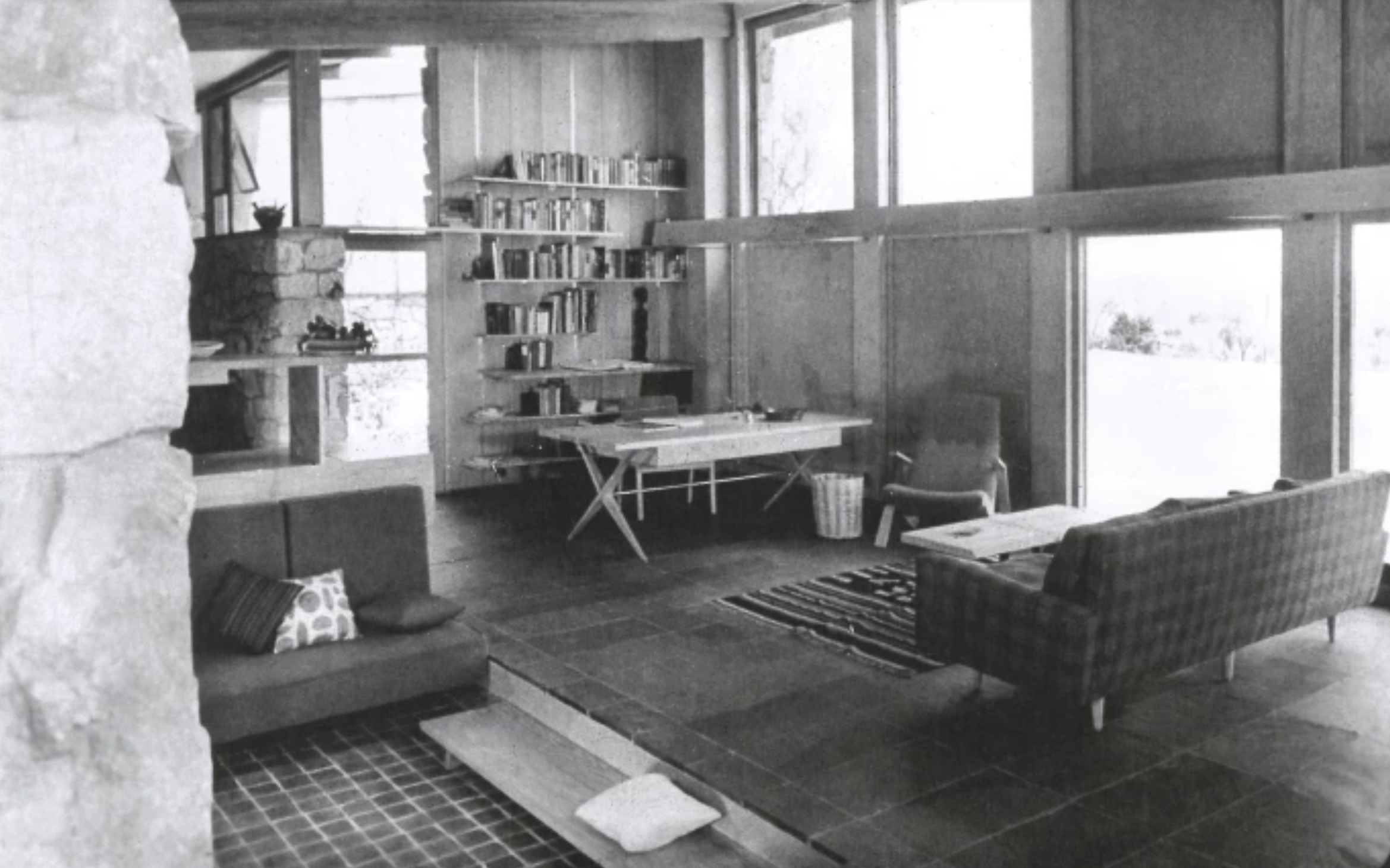
Special attention was paid to the furniture in the Weiss house. For this project, Kahn designed three tables made with solid walnut: a built-in table in the kitchen; an extendable table for the living room, which was never built and instead replaced with a Jens Risom design and bought from the Knoll furniture company; and lastly, the present piece with X-shaped legs with a central drawer, originally conceived as a dining table but turned into a desk for the living room. Its adaptable function from dining table to desk certainly speaks to Kahn’s ingenuous design and pragmatic thinking. Placed prominently in the most dynamic area of the house—and beside a Sonambiant sculpture by Harry Bertoia—, the desk added undeniable structure and sculptural presence to the room.
Read more on sothebys.com