
Shin Takamatsu
and architecture as symbolic event
Domus Magazine, August 31, 2020
Shin Takamatsu is one of those rule-breaking architects whose work has not received the critical attention that it deserves. The spiritual son of such architectural legends as Kenzo Tange and Arata Isozaki, revered in Japan for their reformist interpretation of international modernism, Takamatsu has in his own uncompromising way contributed to defining the experimental and futuristic Japanese architectural landscape of the 1980s.
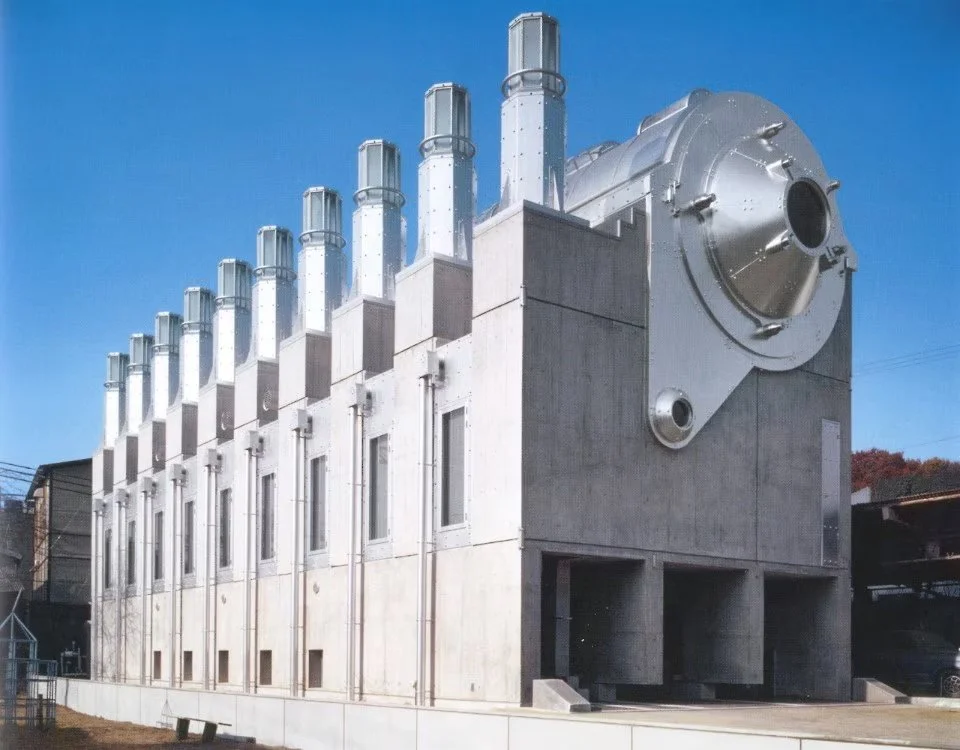
Evoking simultaneously the dystopian world of Blade Runner and the mechanical architecture of the industrial age, his buildings constitute perhaps the most provocative and radical forms of postmodern architecture. While some of his harshest critics argue that his designs are ornamental at best and unpractical at worst, one should consider the incredibly imaginative ways through which he made function service form early in his career.
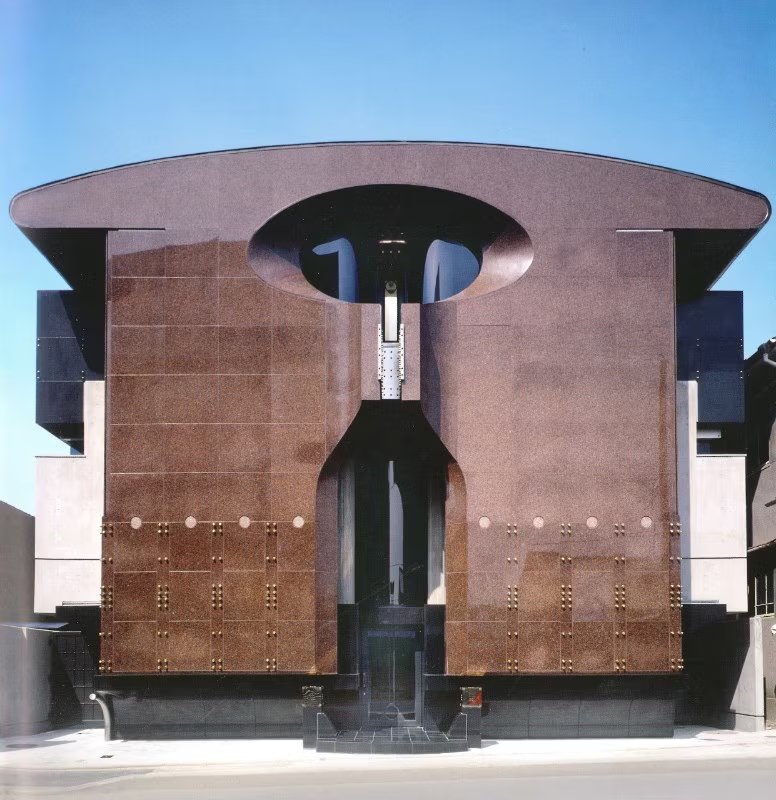
The year following the completion of his doctoral degree in architecture and engineering from Kyoto University, Takamatsu landed his first commission as the head of his solo design firm. Origin I (1980-81), as it was titled, is a highly innovative building and the result of an unusual request from his first client, who asked the young architect that he “design the architecture, and we will decide how to use it once it is complete.” This kind of flexibility is a luxury few newcomers can afford, and an opportunity that he fully seized. Origin I is recognizable by its fortress-like, rose marble façade independent from the street and is characterized by an interplay of straight and undulating lines. The semi-open floor plan and highly functional indoor space sheltered from the street ultimately enabled the owner to use the building as the headquarters of his textile company. With Origin I, Takamatsu created a work that decidedly shaped his practice for the decade to come.
Read the full article on domusweb.it