

A Celebration of Art Deco
Masterworks from the Collection of Dr. Stephen E. Kelly
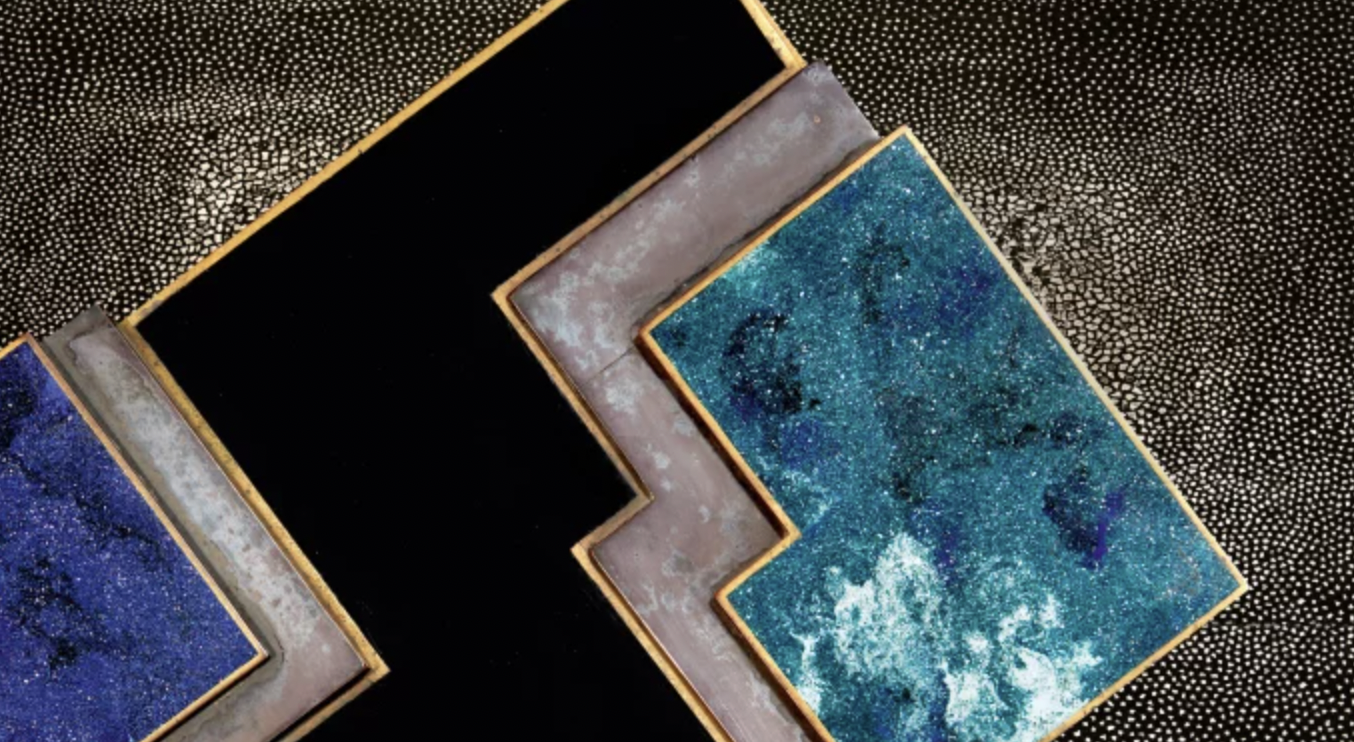
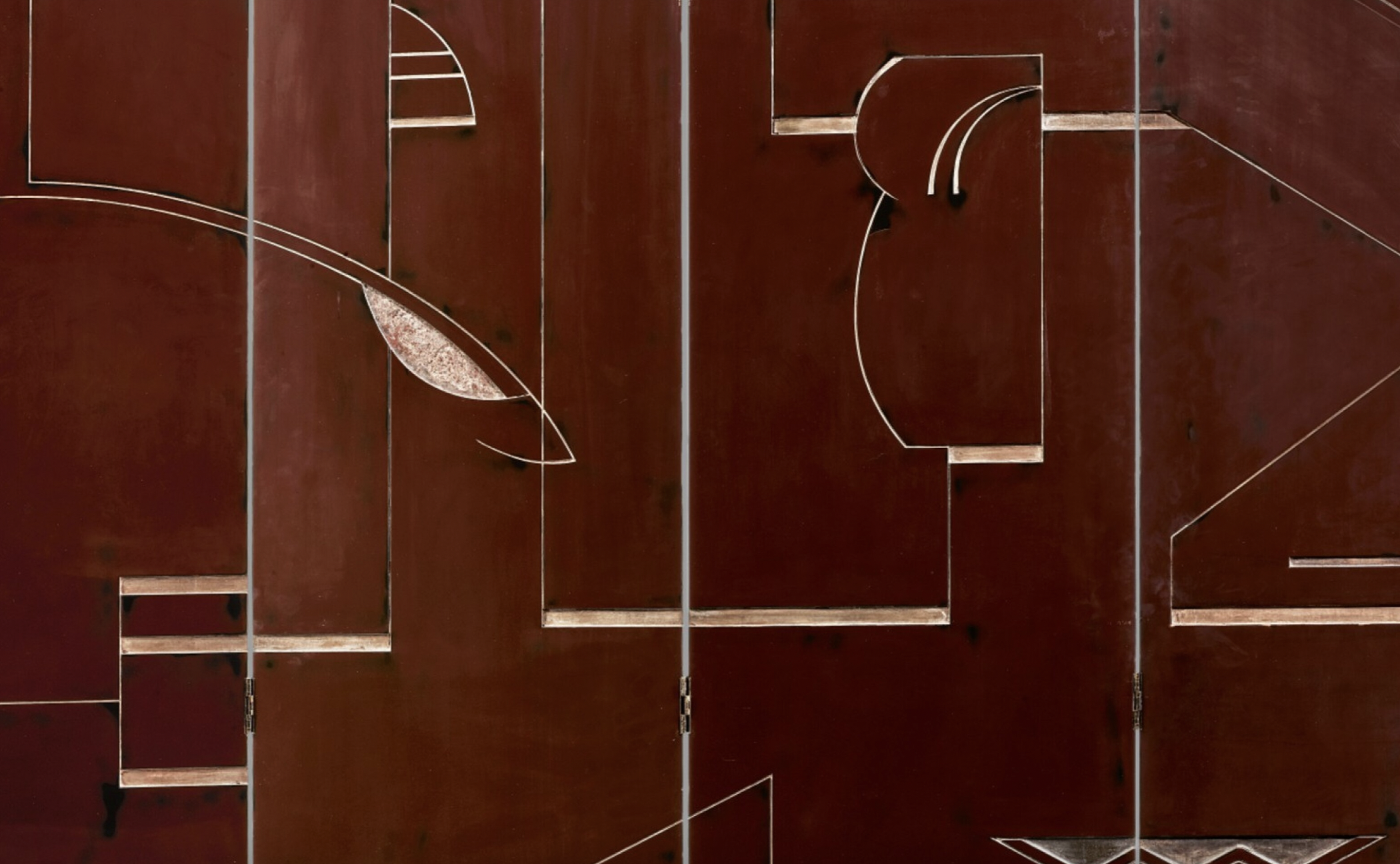
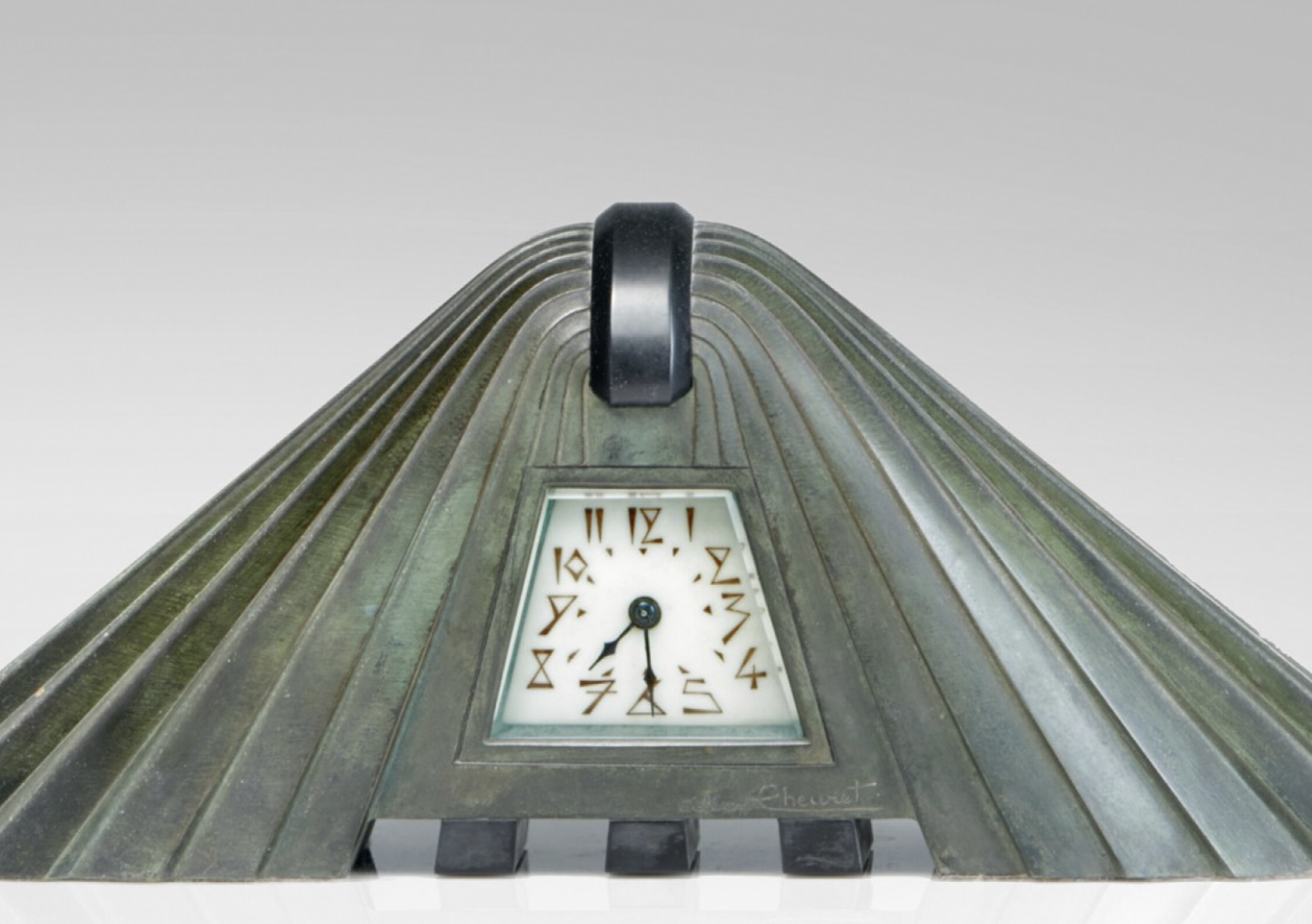
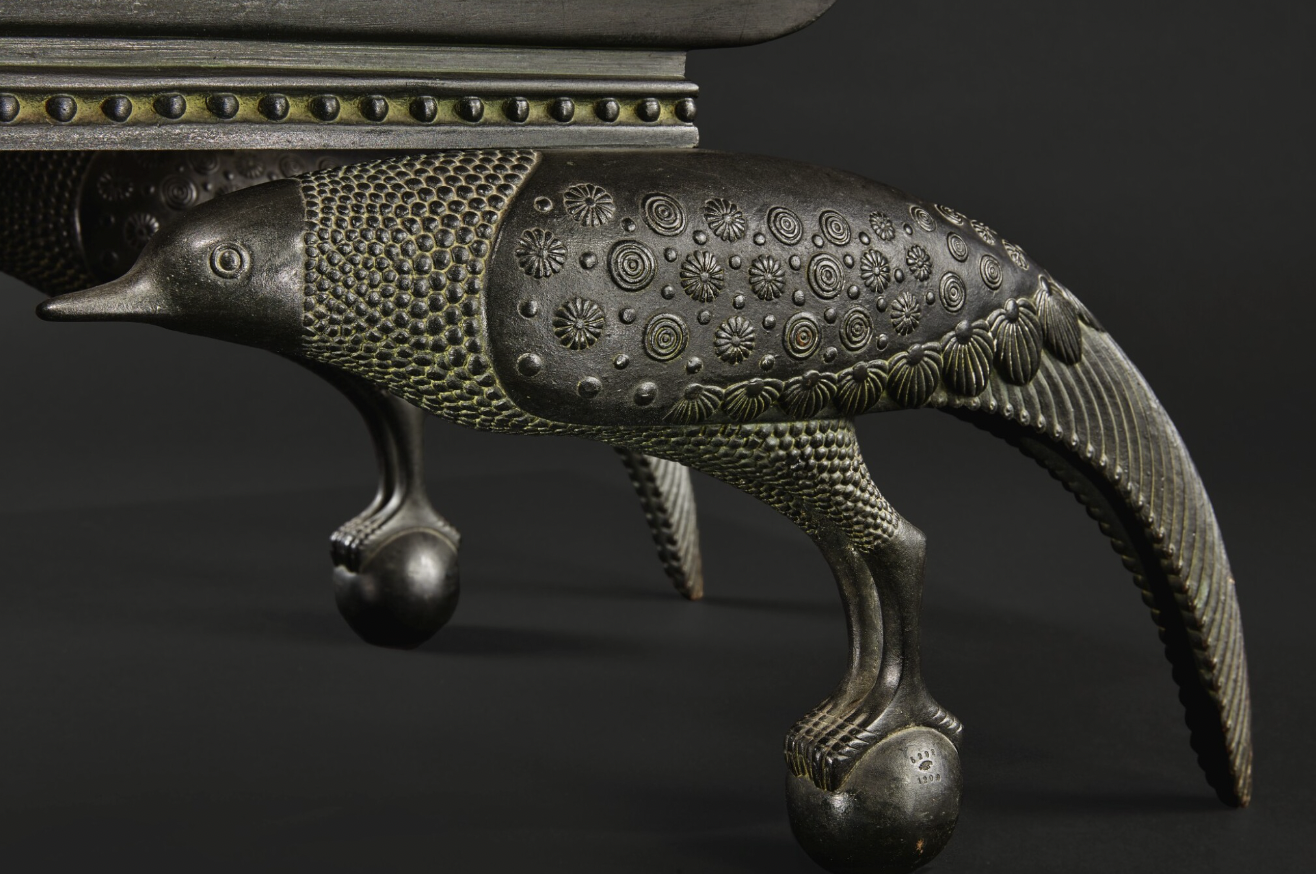
Louis Soulard supervised the research, provenance, authentication, and catalogue production for the auction of Dr. Stephen Kelly’s Art Deco collection in December 2020, comprising over 300 works spanning decorative arts, sculpture, painting, furniture, and objects. Masterpieces of Design included a screen by Eileen Gray, a table by Armand-Albert Rateau, and superlative works by Jean Goulden, Jean Dunand, Marcel Coard, Emile-Jacques Ruhlmann, and Joseph Csaky. Important provenances featured in masterpieces from the collection include John D. Rockefeller, Jr., Andy Warhol, Jacques Doucet, Barbara Streisand, and Karl Lagerfeld.
A Celebration of Art Deco: Masterworks from the Collection of Dr. Stephen E. Kelly is, at its essence, a true celebration of the modernity, sophistication, richness, and aesthetic innovation of the artistic movement that defined the first half of the 20th Century. The impeccable quality of the collection is owed to the unbridled passion and unparalleled connoisseurship of its architect, Dr. Stephen E. Kelly.
Over the course of his decades-long career as a leading ophthalmologist on Manhattan’s Upper East Side, Dr. Kelly’s love of Art Deco flourished as he sought the highest quality works by such masters as Eileen Gray, Jean Goulden, Armand-Albert Rateau, Émile-Jacques Ruhlmann, and Jean Dunand, among others. His passion for the material suffused his life and, after retiring from his medical profession, translated into his second career as a gallerist. Beyond his success both in medicine and art, Dr. Kelly was known by all as the consummate gentleman, a philanthropist, and a true and spirited admirer of the arts. His collection celebrates both the very best of Art Deco and the story of a quintessential collector who pursued his life-long passion with great vigor, exacting standards, and integrity.
Eileen Gray’s Important Six-Panel Screen
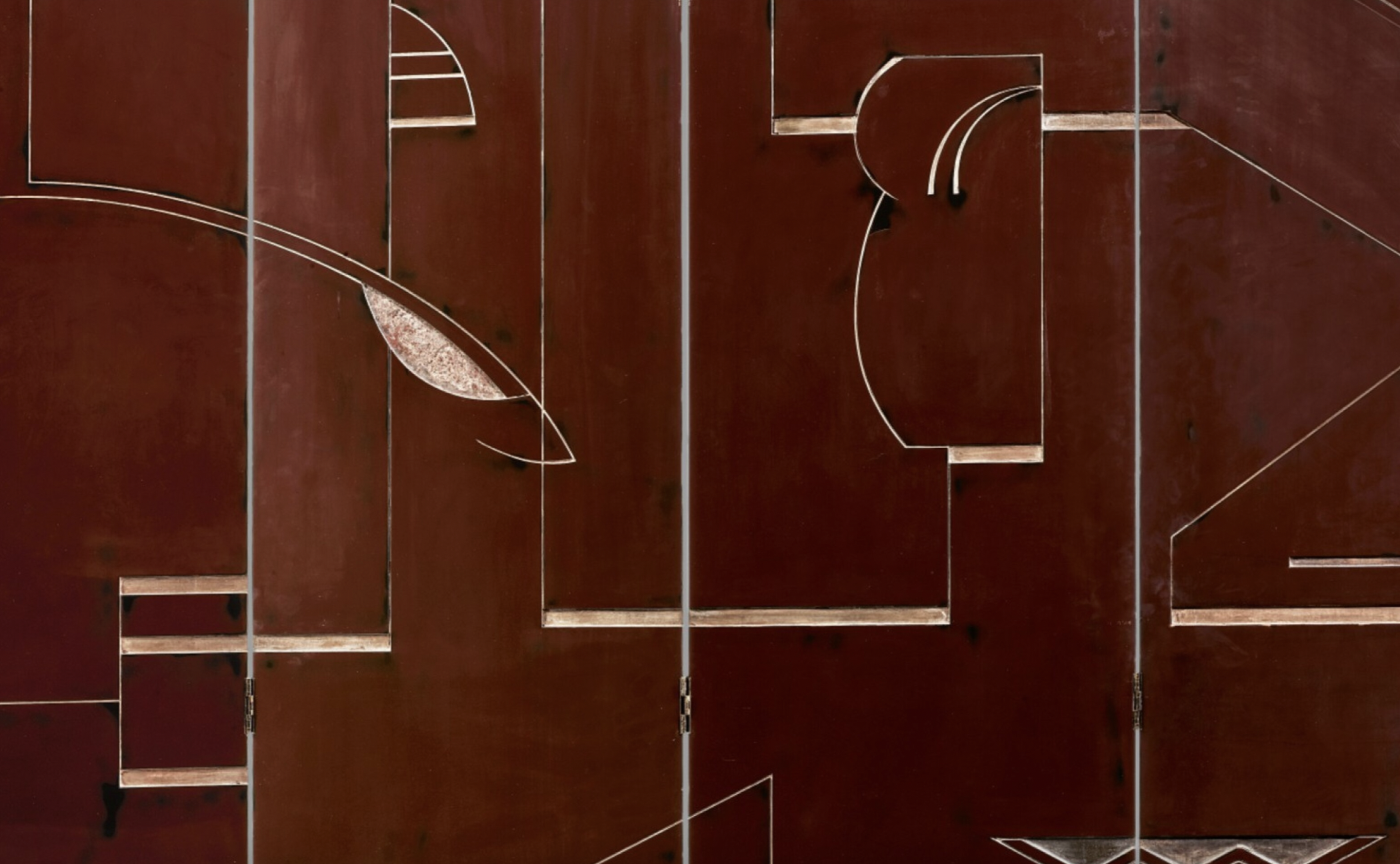
This monumental six-panel screen, designed and executed between 1921 and 1923, is a particularly rare and important piece by Irish architect and designer Eileen Gray. A work of art which displays the avant-garde sensibility of its creator, the present work is one of very few screens that is known to have survived and constitutes a paramount masterwork of 20th Century Design.
A Career-Defining Tour-de-Force
When seen in the context of Eileen Gray’s œuvre, the present piece reflects the artist’s stylistic shift towards abstraction in the 1920s. Up to that point, Gray’s lacquered screens were imbued with figurative and lyrical sensibility, depicting human figures and allegorical narratives. In Le Destin (1913-1914), three standing figures occupy the multi-panel surface and are depicted with an iconography evoking the arts of ancient Greece; in Oriental Mountebanks (circa 1915), the lacquered surface presents a procession with several Asian figures in colorful garments; La Nuit (circa 1917) depicts a poetic figure striding across a starry sky. While the present screen offers no tangible sign of figuration, the influence of avant-garde and neo-Constructivist artists such as Piet Mondrian is all the more evident in the treatment of the abstract motifs adorning the screen. The subtle balance of lines, half circles and angles resonates with the Dutch master’s work produced around the same time while living in Paris. The superb gold and silver leaf motifs complement the flawless application of rich red-brown lacquer, creating an ensemble that harmoniously combines Symbolist and Modernist influences.
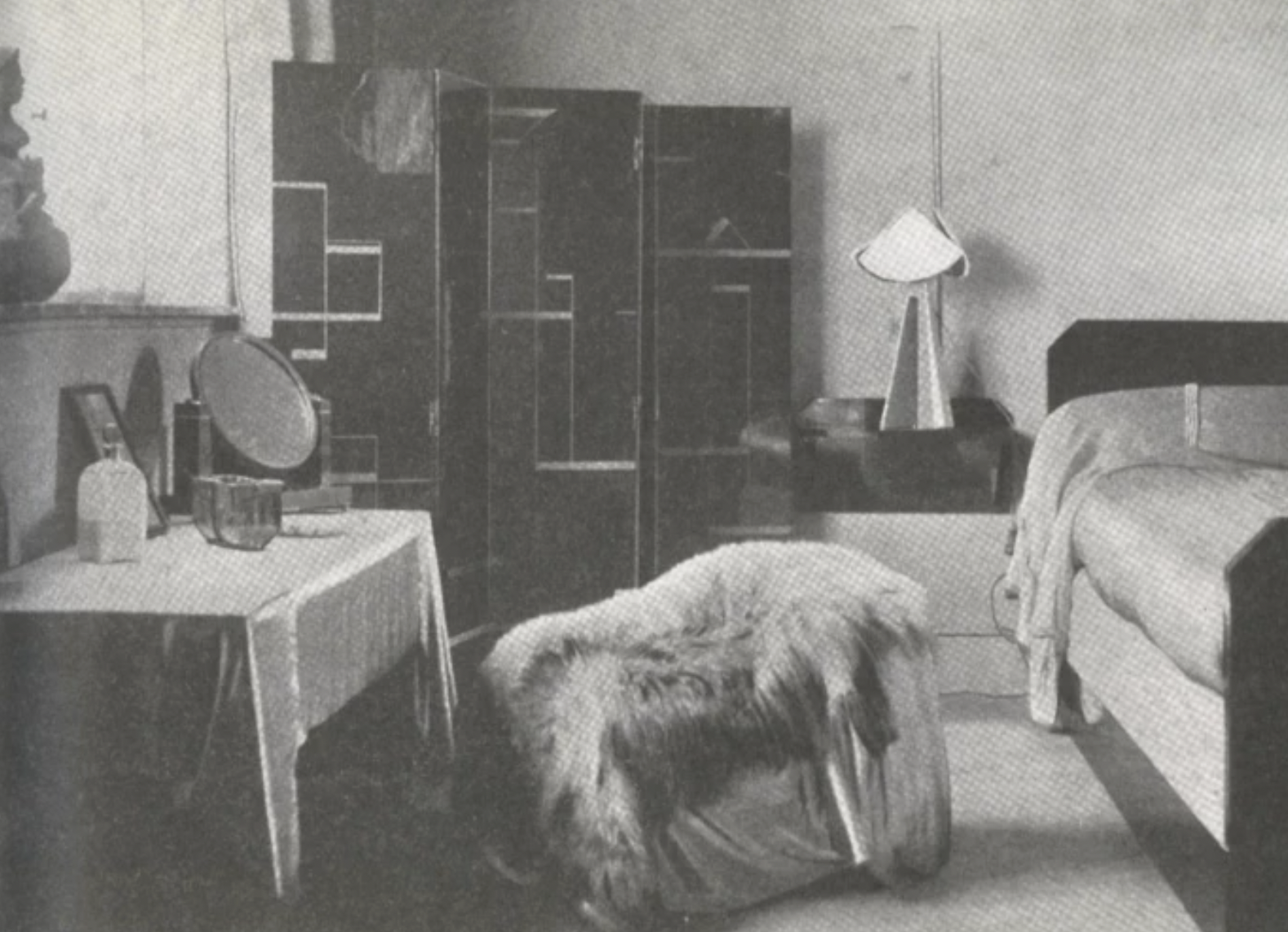
Although our present screen is unique, at least one related iteration is known to exist. It originally belonged to Mrs. Jacques Errera and was placed in the corner of her bedroom, as pictured in a photograph from Art et Industrie in November of 1926. Mrs. Errera’s example displays very minor variations in the placing and general organization of the geometric motifs. This indicates, together with a gouache sketch picturing a related pattern, that Gray may have been particularly fond of this specific pictorial treatment and fully experimented with its boundless visual combinations. The transitional series occurred as she was developing a new series of screens known as “Brick” and characterized by their free-standing structure and movable rectangular panels. While a prototype of this model is known to have been made as early as 1918, she only started to produce these screens more consistently circa 1922-1923.
Expression Through Lacquer
The six-panel screen’s decidedly Modernist character is only amplified through the designer’s full mastery and understanding of lacquer. Eileen Gray’s use of the complex medium is the result of much research and practice over the course of several years. She is one of few European artists from this generation to successfully master Japanese lacquer techniques and to grasp it with such artistic virtuosity. Gray first encountered Japonism through museum visits at the Victoria and Albert Museum and the National Museum of Ireland, where she saw lacquered furniture pieces and was reportedly immediately drawn to their tactility. In 1907, following an apprenticeship with Arts & Crafts designer William Morris and lacquer artisan D. Charles, Eileen Gray permanently settled in Paris where she met Japanese lacquerer Seizo Sugawara.
Sugawara’s mentorship prompted Gray to develop her own network of Japanese lacquerers based in Paris and to keep thorough notebooks solely devoted to the technique, which provide insights into her detail-oriented and painstaking approach to the medium. Redacted between 1914 and 1923, the notebooks are now held in the collections of the Victoria and Albert Museum in London. Together, Gray and Sugawara opened a workshop rue Guénégaud where they showcased the Irish designer’s original lacquer creations, which started to flourish around 1913-1914. They became influential figures of the experimental decorative arts scene in Paris. One should note that it is Eileen Gray who introduced Sugawara to Jean Dunand in 1912, launching the Swiss metalworker’s exploration of lacquer.
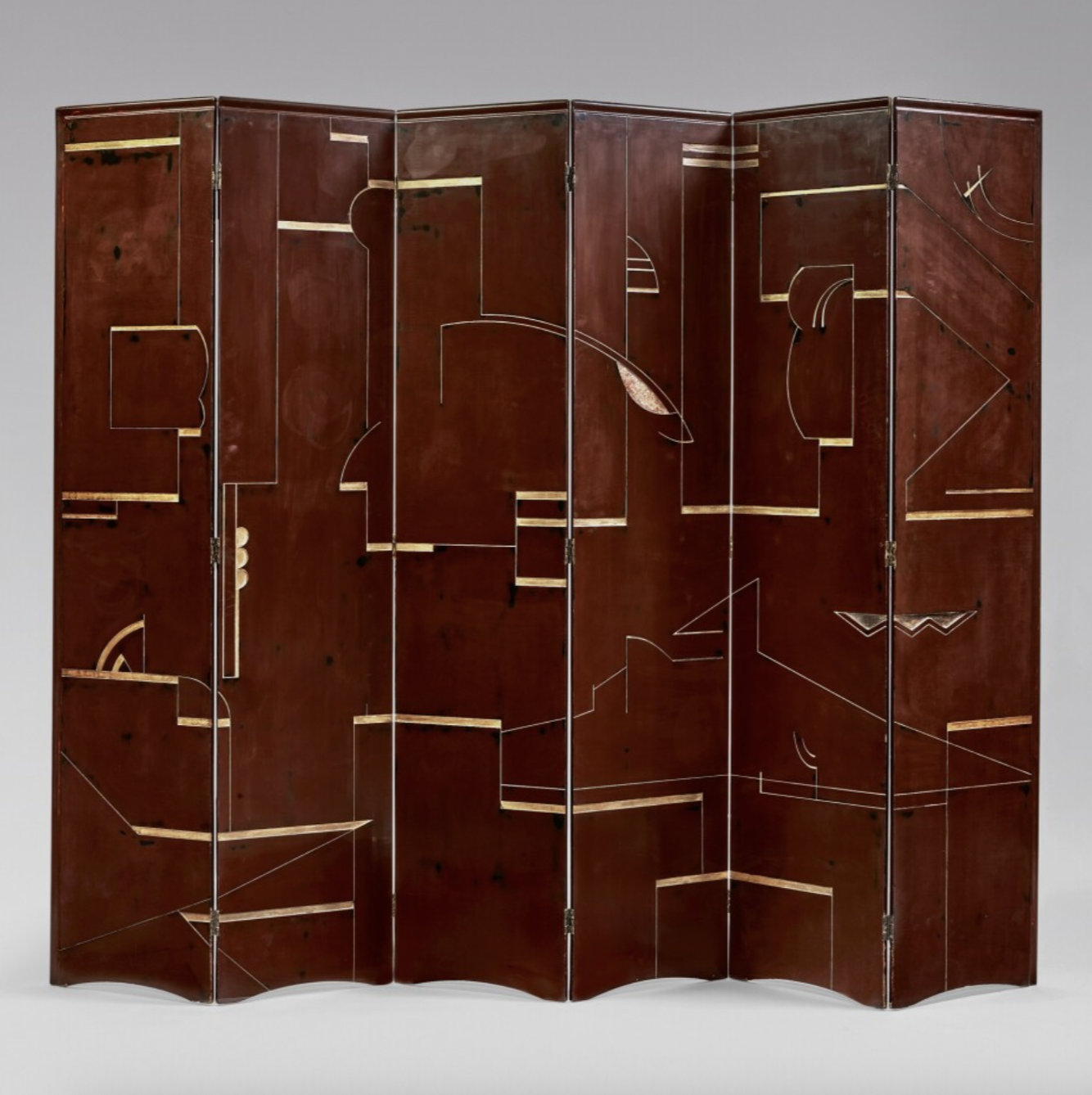
While learning and refining her lacquer techniques with Sugawara, Gray also started to innovate by creating new color patterns such as a palette of deep nocturnal blues, which were used for Le Destin. While her first motifs drew upon conventional Orientalist themes and followed Japanese narrative conventions, which dictate that, much like handscrolls, a screen should be read from right to left, our present screen unmistakably departs from such pictorial conventions. As previously discussed, the lacquered surface not only by suppresses references to a specific narrative, but by treating the lacquered surface like an abstract canvas closer in spirit to a Kandinsky or Mondrian composition than a figural Japanese folding screen.
The Jean Désert Adventure
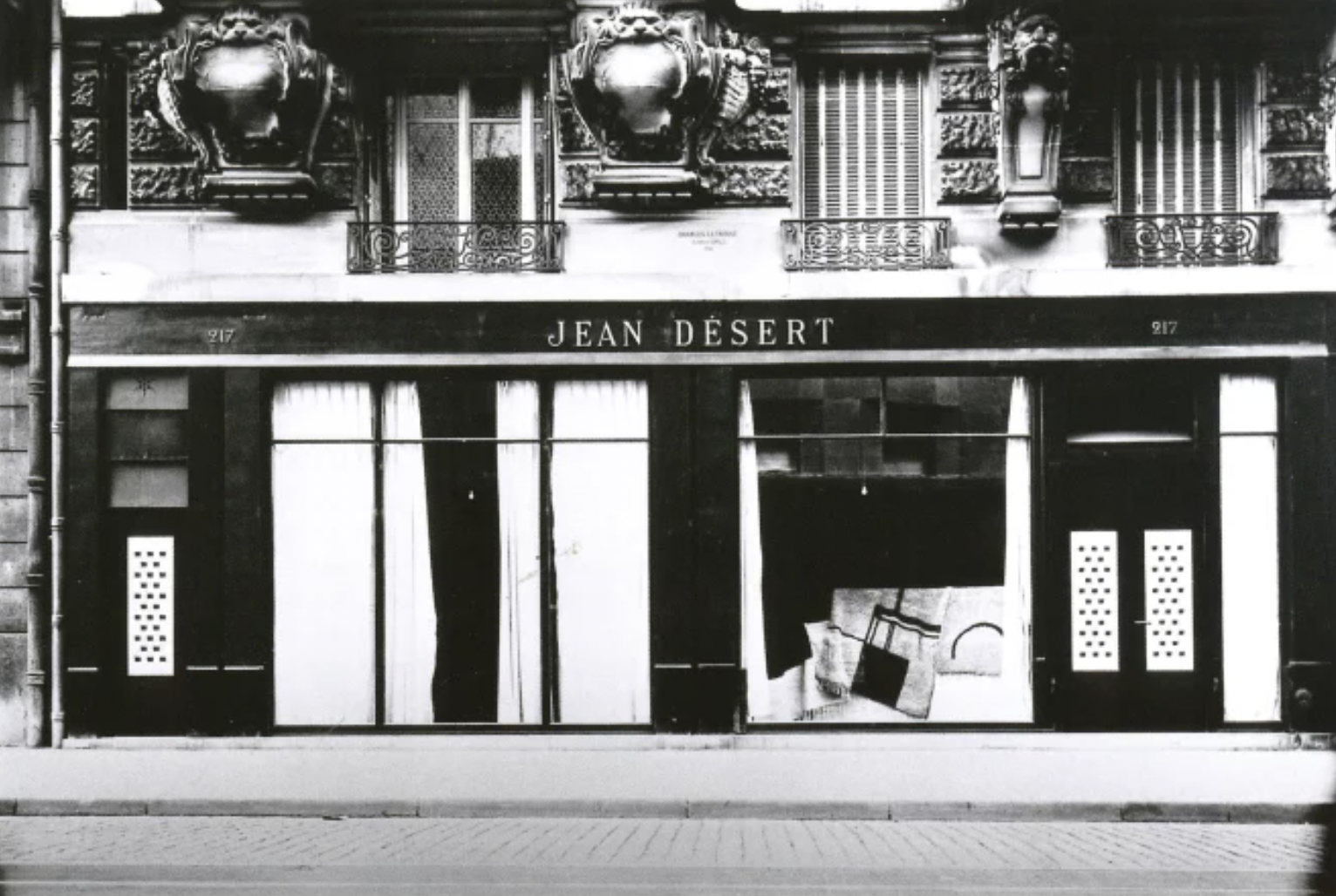
The screen is undeniably linked to a particularly experimental period of Gray’s career. In 1922, in addition to her workshop rue Guénégaud, she opened a gallery rue du Faubourg-St. Honoré to show her designs in a more commercial and refined setting. Gray called it “Galerie Jean Désert,” a fictitious name whose origin is unknown. One can speculate that this masculine alias was chosen to further assimilate to the luxurious and gendered Parisian street, home to the galleries of Louis Süe and André Mare, Dominique and Paul Poiret. The gallery space showcased Eileen Gray’s tremendous versatility as a designer through the presentation of various forms and designs: lacquer screens, furniture, lamps, daybeds, mirrors, and even hand-woven carpets. She occasionally showed work by other artists such as Ossip Zadkine and Chana Orloff. Jean Désert also proved particularly economical, allowing Gray to show her work more easily and to curate exhibitions of experimental objects that were either unique or made in limited numbers. As archival records show, the gallery was particularly lucrative in selling rugs, the most affordable commodities for sale in the space, but struggled with three-dimensional works in lacquer— possibly deemed too experimental and unapproachable at the time.
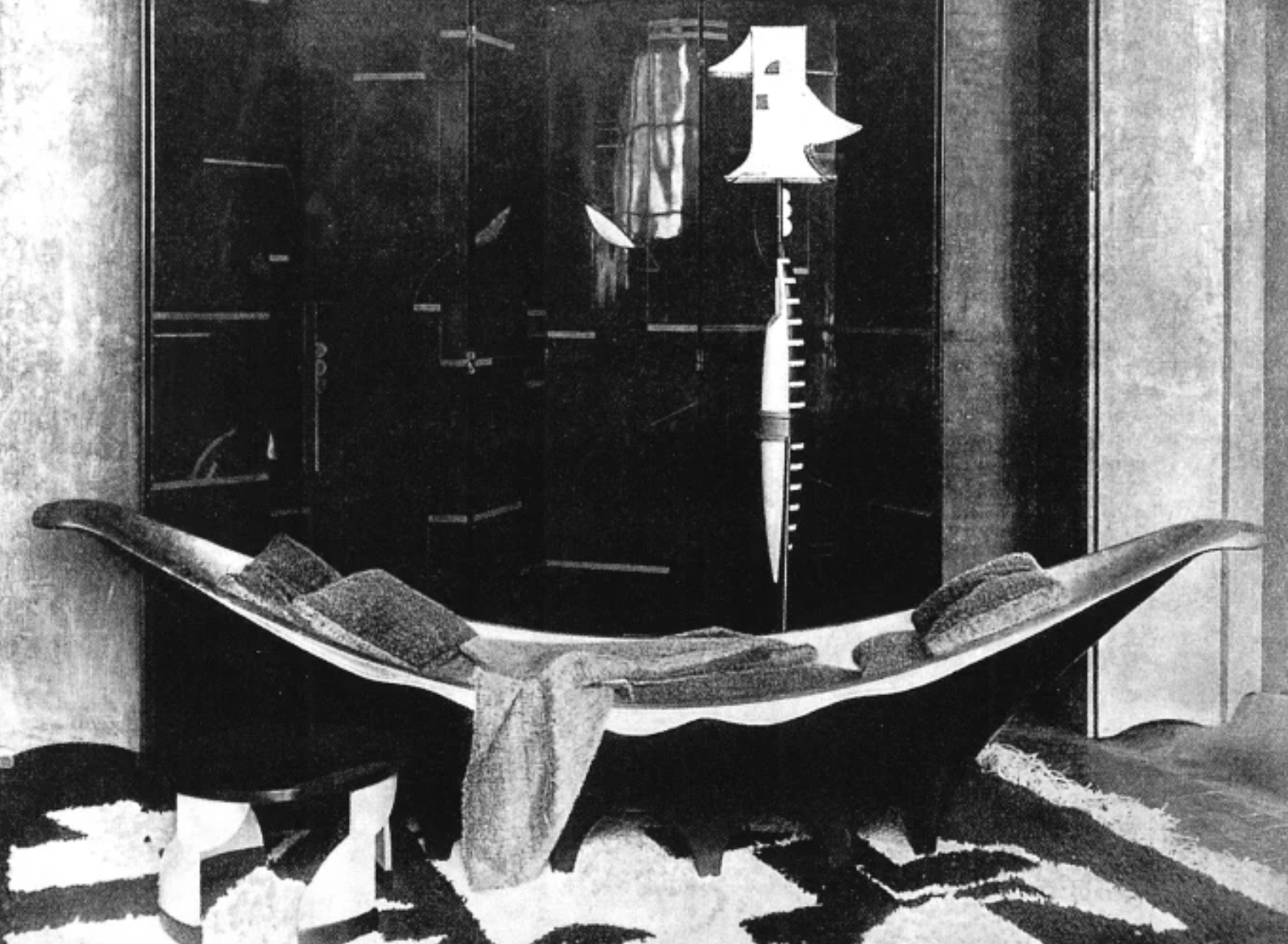
It was also during this pivotal time that Eileen Gray sought greater recognition for her work as a designer, most notably by participating in the 1923 Salon des Artistes Décorateurs, helping her expand her client base. While the gallery’s output was small, Gray’s clientele was reliable and included important figures from Parisian avant-garde circles as well as an increasing number of American, British and Belgian collectors. The foreign press especially raved about the gallery’s eclectic ambiance. A journalist from the Chicago Tribune referred to his visit to the gallery as an “adventure” with “furniture in bizarre forms and styles.” The Dutch newspaper Wendingen dedicated their June 1924 issue to the Irish designer and spoke enthusiastically of her experimental practice. A photograph from the lead article shows the present screen framing an artistic composition that brings together a rug, a floor lamp and her iconic “Pirogue” daybed. Despite its encouraging proximity with elite and international circles, Gray lost interest in Galerie Jean Désert towards the late 1920s and turned her focus to architecture. She closed the gallery permanently in 1930.
A Story of Exceptional Provenance
Upon the gallery’s closing, the screen was purchased by Georgette Labourdette, wife of Jean-Henri Labourdette, the well-known French coachbuilder who revolutionized automobile design and production. The couple were one of Gray’s most important clients and commissioned a number of pieces from her throughout the 1920s. A photograph of their living room published in L’Art d’Aujourd’hui in the spring of 1927 shows the extent of their Eileen Gray collection: a desk, ottoman and vase with pedestal clearly delineate the organization of the space. One of Labourdette’s best known commissions, sadly not pictured on the photograph, was a pair of armchairs with a wooden frame and a leather seat and back with geometric motifs, made circa 1930. Their collection of Eileen Gray furniture, including the present screen, remained in the family’s possession until the 1970s. Art Nouveau and Art Deco collector Jean-Claude Brugnot then acquired the screen which became a landmark of his collection, before passing it on to Steven A. Greenberg. While under the stewardship of Dr. Kelly, this seminal work has been exhibited at the Centre Pompidou in Paris, the Irish Museum of Modern Art in Dublin and, most recently, at the Bard Graduate Center in New York. Its exhibition history is a testament to the importance and rarity of this masterwork and to Dr. Kelly’s role in ensuring it would be viewed and appreciated by the public.
Ruhlmann’s Luminaire for the
Île-de-France liner
In the world of Art Deco, the name Ruhlmann does not immediately equate with the realm of ceramic arts. To this day, the cabinetmaker and decorator is indeed most often associated with high-quality furniture pieces that defined the movement. Architectural historian Jean-Paul Midant notes that it was rare for Ruhlmann to use decorative ceramics in his interiors and instead favored statement-making pieces of furniture made with precious woods and high-quality metals. He intermittently worked with ceramist Jean Besnard from 1920 onwards, mostly in the creation of finely executed table lamps (lots 135, 165 and 170) that complemented his interiors.
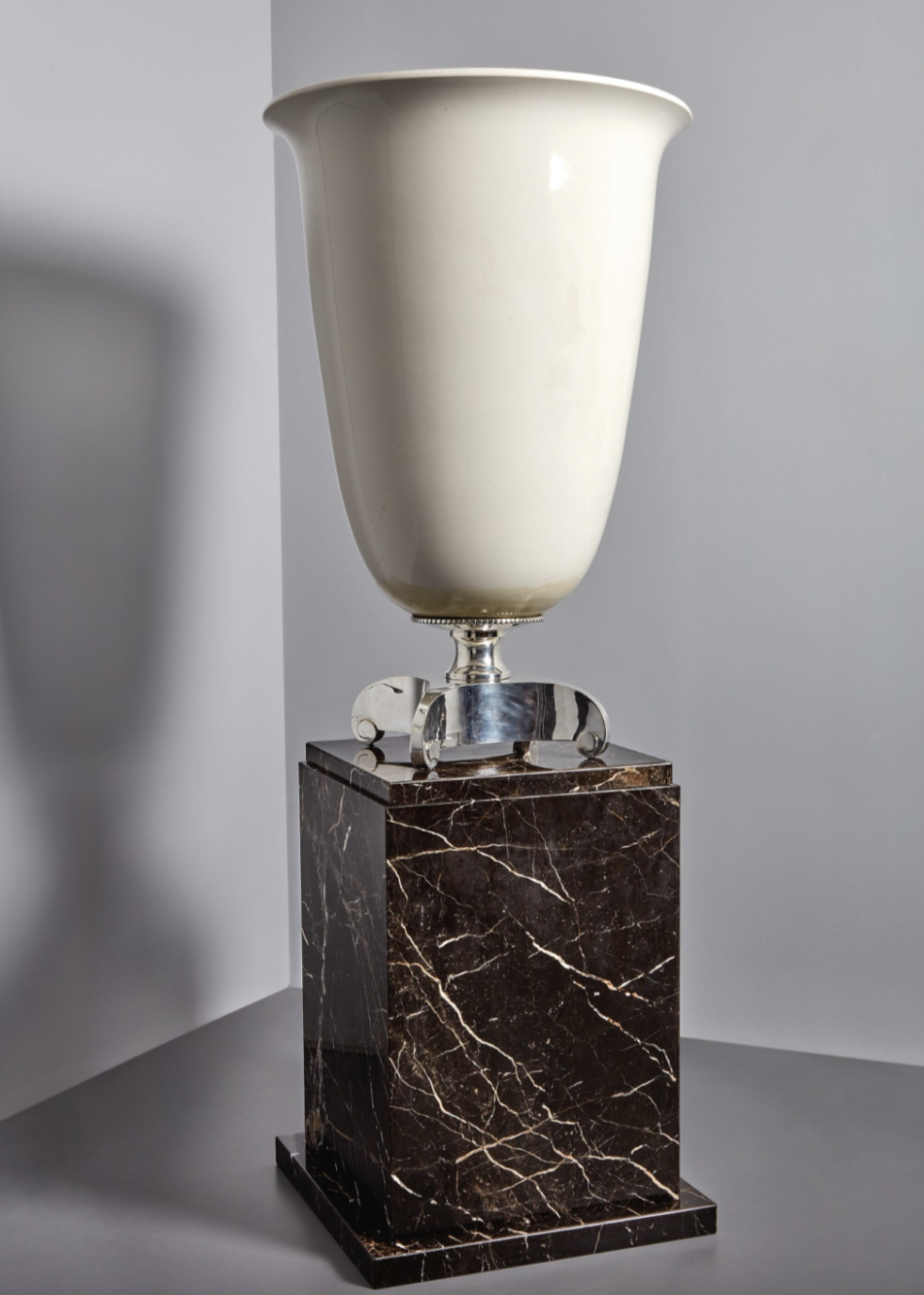
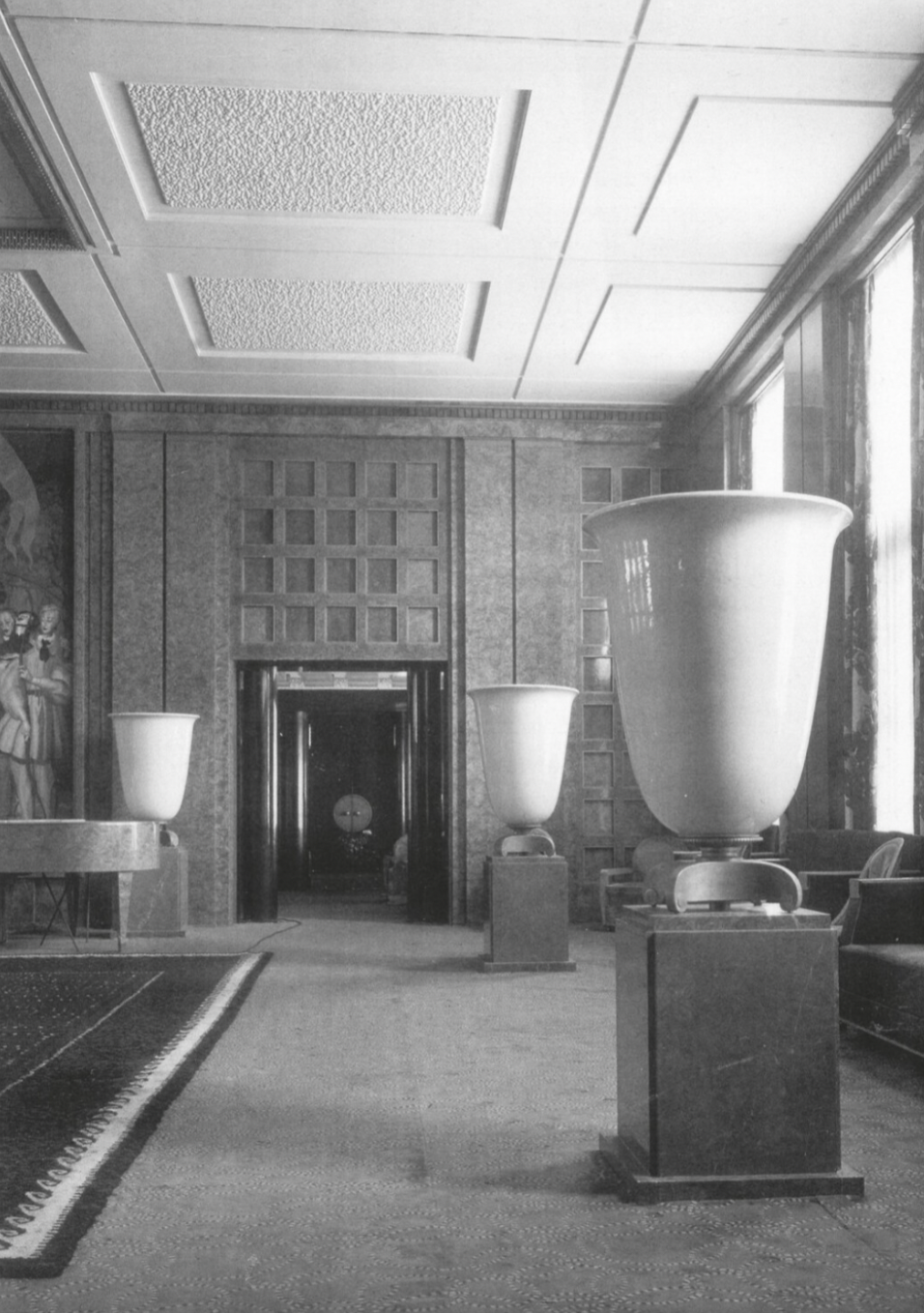
Given this context, his collaboration with the Sèvres Porcelain Manufactory in the mid-1920s was all the more exceptional. The definitive highlight of their partnership was their work on the Île-de-France luxury liner, for which the decorator created between seven and ten monumental lighting vases made with porcelain, each resting on a silvered bronze base and placed on a large pedestal. The vases were unique the First-Class salon de thé, an incredibly chic space on the liner with high ceilings and a subdued atmosphere. A large figurative panel by Dupas anchored the room, further enhanced by superb wood paneling and a high white ceiling with relief decorations. Ruhlmann’s luminaires, due to their size and volume, restored the verticality of the space and certainly contributed to the theatricality of the room. Each lighting vase was placed towards the outer edges of the room, some near the ship’s large windows, and produced dramatic lighting effects.
The Île-de-France liner’s inaugural journey began on June 22, 1927. The ship was an ambassador for the decorative arts of France, with other important decorators commissioned to build specific rooms on board—the reading and writing rooms were decorated by Leleu and the lounge by Süe et Mare. Critics were quick to applaud Ruhlmann’s salon de thé. In a Mobilier et Décoration article from 1927, Pierre Lahalle specifically commented on the luminaires from the smoking room: “The lighting in this salon was executed in a very audacious and pleasant manner. Large vases in Sèvres porcelain, completely opaque and with a curvy shape, enclose powerful projectors which at night inundate the white ceilings with light.”
A sign of its immediate popularity, the form was quickly picked up by the Manufactory and reused for a variety of purposes—mostly smaller decorative vases in porcelain with decorations by Lucienne Ne and Suzanne Lalique. Ruhlmann subsequently designed variants of the design, mostly smaller table lamps also produced by Sèvres and documented in the Ruhlmann archives under numbers NR3303, NR3391 and NR4103. At times, alabaster replaced porcelain as main material for the shades.
Despite their subsequent and numerous iterations, the few pieces linked to the original commissions are nearly nonexistent. All of the original seven luminaires were destroyed together with the liner around 1959. However, and as Louis-René Vian reports, the Sèvres Manufactory produced four additional models sent to Ruhlmann for his own clients. Given its date of production, our present lot is likely one of the earliest period replicas of the Île-de-France model known to exist. To this day, the only other documented example is located at the Hôtel Potocki in Paris, an Art Deco landmark renovated in 1925-1927 by Ruhlmann himself, and proudly exhibited in situ. Because of its rarity, unique artistic quality and its ties to one of Ruhlmann’s most celebrated commissions, the present lot provides collectors with the opportunity to acquire an exceptional landmark of Art Deco design and a surviving symbol of the transatlantic golden age.
Jean Goulden
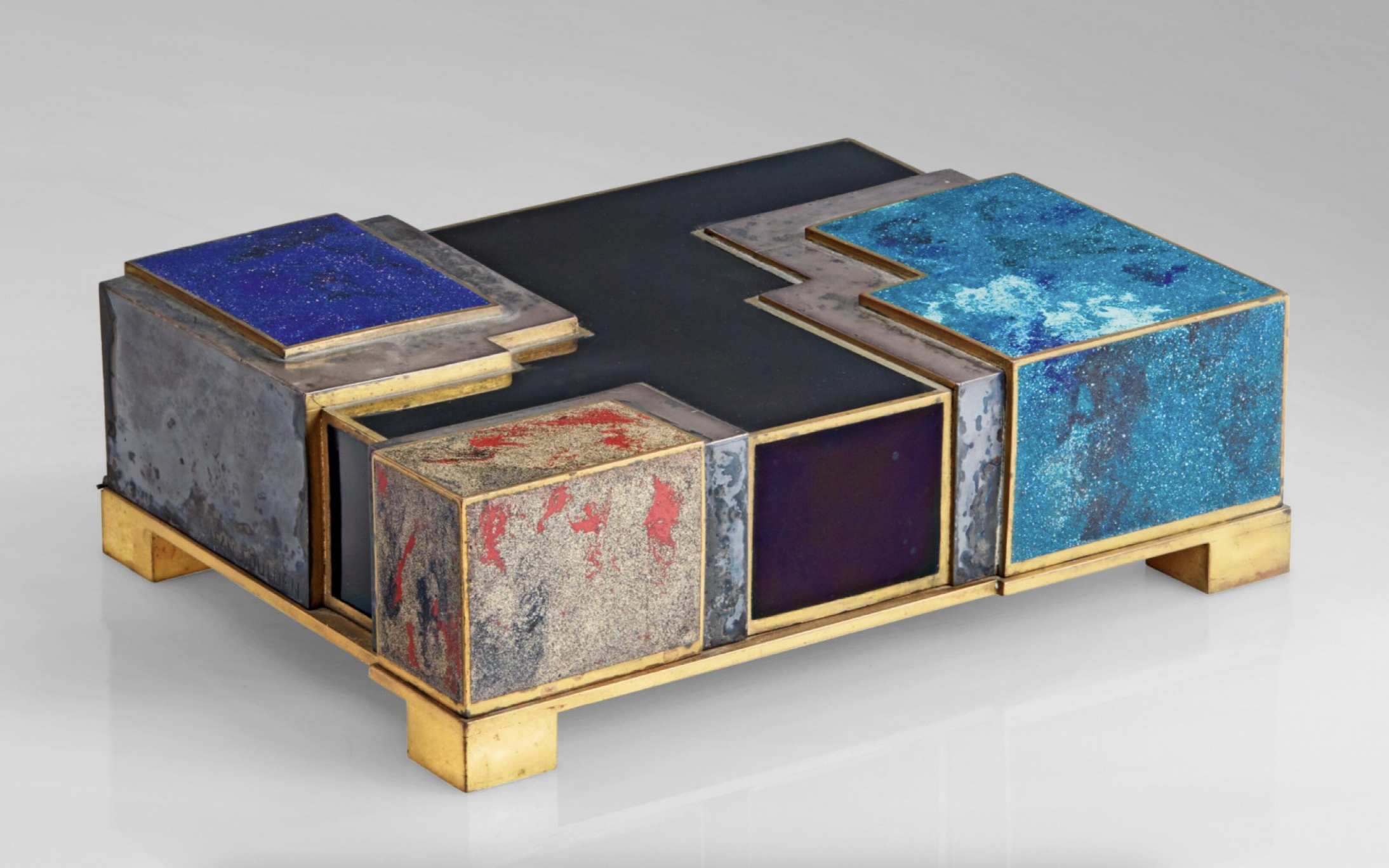
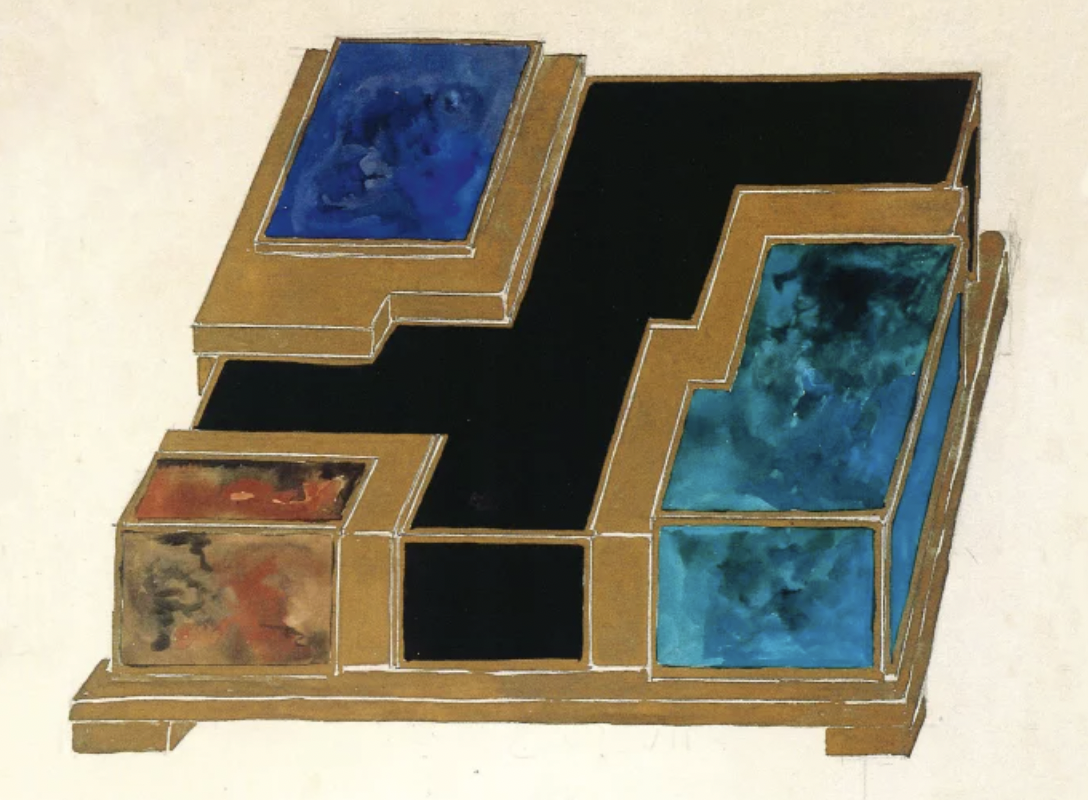
Jean Goulden is best remembered for the finely crafted modernist boxes that he produced in extremely limited number throughout the 1920s. It was his friend Jean Dunand who originally encouraged him to explore the champlevé enamel technique, which he fully embraced in the creation of his most remarkable boxes and decorative objects. He and Dunand exhibited together at the Galerie Georges Petit from 1920 through 1933. The surviving works that he produced during this period, including drawings and watercolors, are extremely rare. The present lot represents one of the artist’s most spectacular achievements, skillfully blending texture, form and color in a manner that exemplifies his complete mastery of the medium. The equally superb drawing accompanying the coffret reveals that the piece was exhibited at the Galerie Georges Petit in 1932. A handwritten note indicates that the piece may have originally been tied to a “Mr. R. S.” residing in the city of Tourcoing in northern France, though additional information is not available.
For more information, please visit sothebys.com